September to October sees a surge in wellness and supplement buying as parents reset routines, stock up for flu season, and strive to stay healthy.
If you’re a brand or marketer in this very active space, having the right audience data is crucial to standing out from a crowded field.
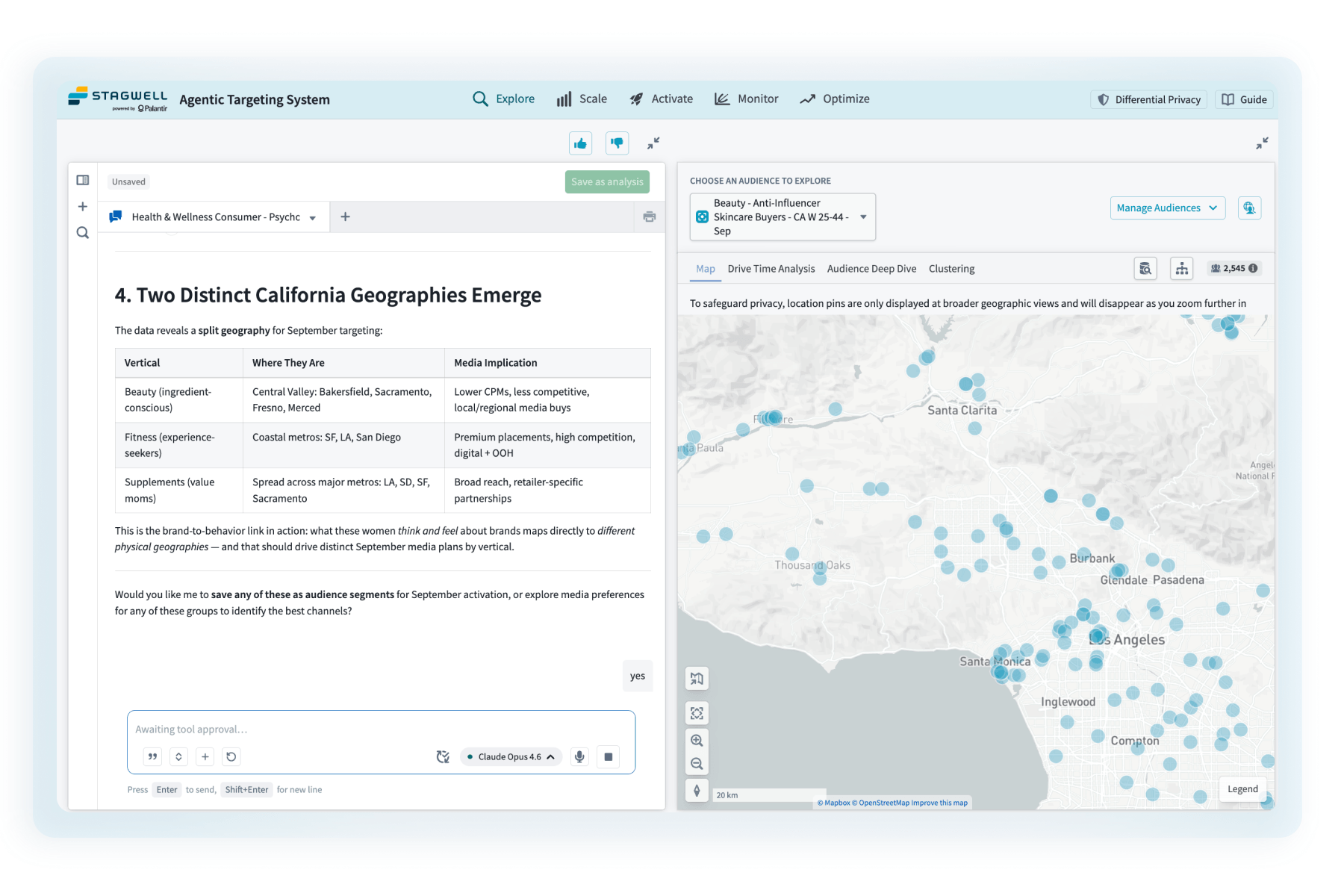
Below, we turn to Stagwell Agentic Targeting System (SATS)—a powerful new audience-intelligence platform from The Marketing Cloud, powered by Palantir—to shine a light on what makes beauty, fitness, and supplement audiences tick.
Insights on beauty, fitness, and supplement audiences in 2026
Demographics tell you reach, but values and trust signals explain conversion, loyalty, and defensibility.
The right data sketches a more complete psychological profile of the consumers you’re actually trying to reach.
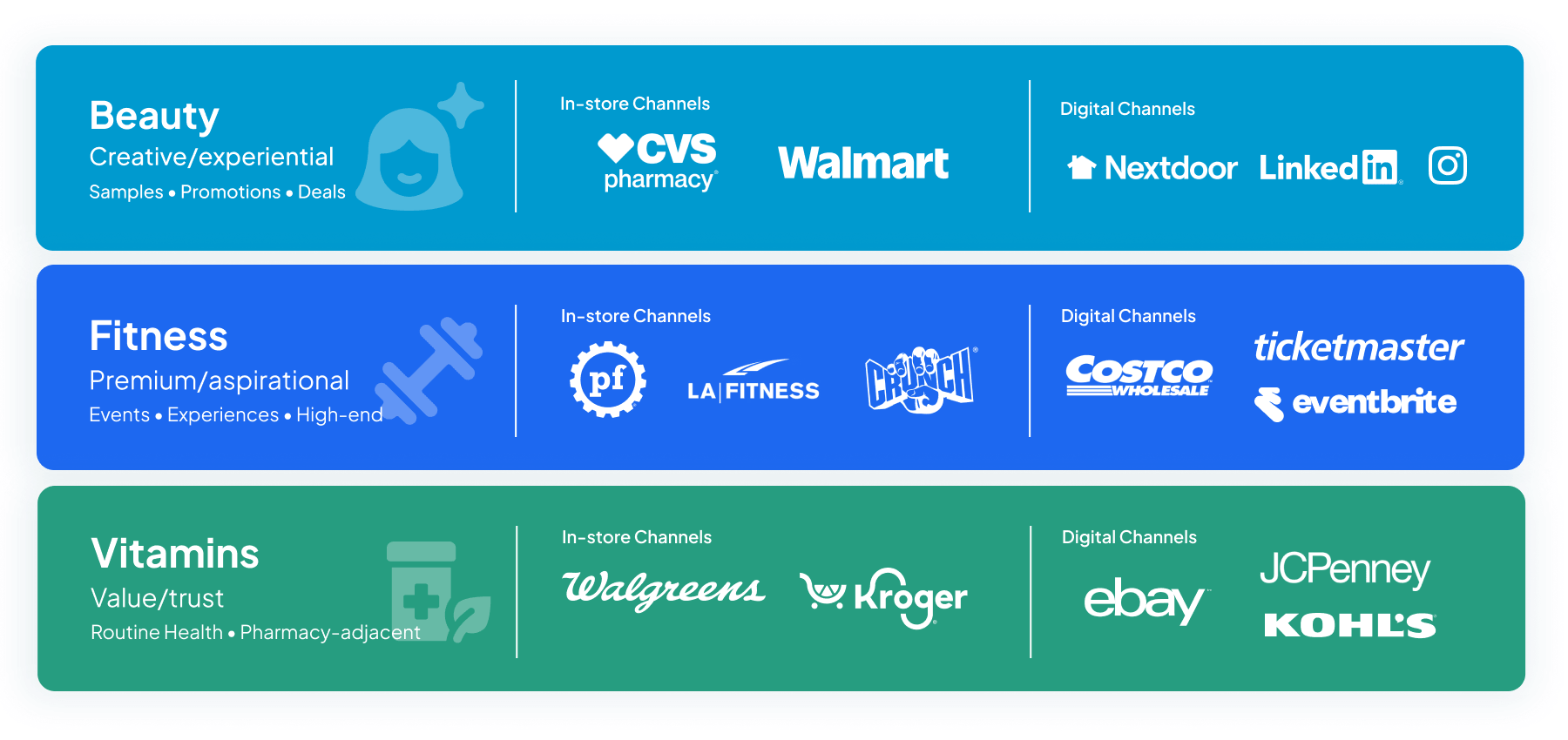
Let’s take a high-level look at some of the SATS data, starting with audience-specific qualities and preferred in-store and digital shopping channels:
Beauty buyers buy trust, faith in routine success, and confidence.
Nearly half the U.S. adult population—~120M consumers—have purchased health and beauty products.
Within this group, ~34M consumers are active multi-step skincare users focused on ingredient-conscious routines.
A customer who values ingredient transparency will never buy from a brand that can't explain the hydration benefits of snail mucin vs. milky toners.
Beauty buyers are heavy in-store shoppers, with CVS serving as their #1 destination (11.1% shopped there in the last 30 days).
They are community-oriented, over-indexing on platforms like Nextdoor (13.5%) and LinkedIn (12.1%).
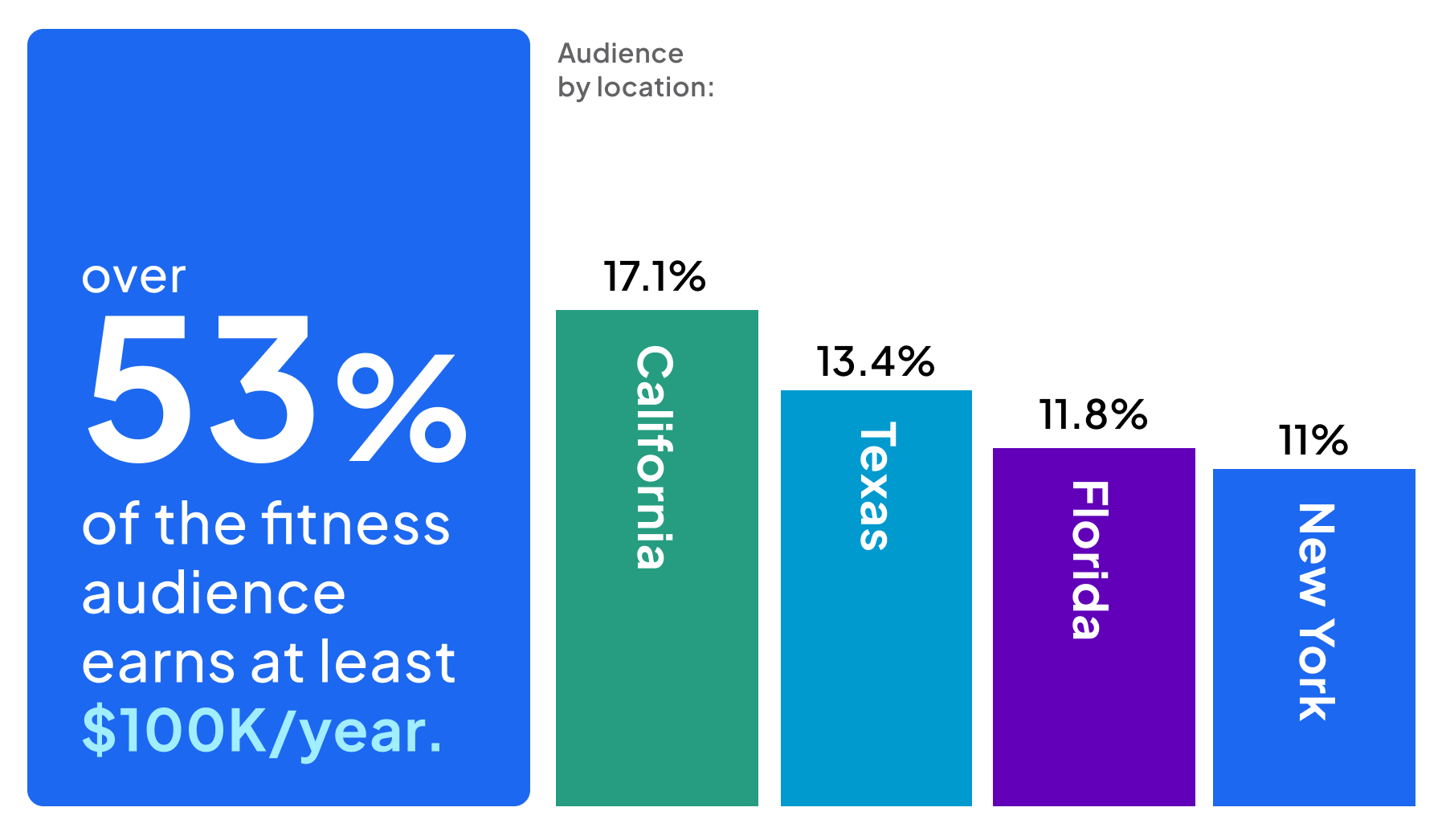
Fitness customers buy identity, community, and proof of results (and they have money to burn)
A customer worried about gym intimidation will choose a welcoming community gym over a trendy boutique fitness studio.
Instead of guessing, observed foot traffic reveals where they actually work out, such as Planet Fitness (46.7% share of all visits) or LA Fitness (11.1%).
This audience is both price-conscious and experience-seeking, frequently shopping at Costco (12.6%) and Ticketmaster (10.3%).
Supplement buyers are buying safety, efficacy, and trust in the brand.
This is a niche, high-intent audience of ~1.8M heavy users.
They feature a counter-intuitive income skew, with over 52% earning under $75K, proving they are value-driven consumers investing in health despite limited income.
A parent worried about fake products will buy from retailers she trusts.
They purchase supplements during grocery and pharmacy runs at stores like Walgreens (14.9%) and Kroger (14.9%), not specialty health stores.
This is an older, contemplative audience whose top hobbies include stargazing (11.3%), birdwatching (9.6%), and crossword puzzles (9.6%).
More insights for the fall 2026 wellness space:
Skincare customers are in-market in September for seasonal routine shifts, transitioning to richer formulations as fall hits.
Fitness customers are most receptive to upgrades on a day they typically visit the gym, capturing pre-holiday motivation.
Supplement customers are buying back-to-school immunity gear in a specific 4-week window, so you’d do well to target the ~506K heavy users who have children ages 0–17 at home.
Unlocking your data advantage: Connecting thinking & doing
Stagwell Agentic Targeting System (SATS), is a privacy-first audience platform built for modern marketers struggling with fragmented data and disconnected tools. Powered by the Stagwell ID Graph, it includes 261M+ Consumers, 123M+ Households, and 1,000+ Attributes per Profile.
When a client onboards their first-party data, SATS layers it directly on top of these consumer profiles. This allows you to:
Connect to your audience’s real-world behavior with first-party customer data.
Discover real-world movement data like store proximity, visits, competitor proximity and when and where people are shopping.
Unveil competitive purchase signals, such as what other brands your customers are buying, at which retailers, and how frequently.
Learn the why behind TV consumption patterns, shopping signals, and other lifestyle and life stage indicators.
When you can connect these layers, you're not making assumptions anymore. You're observing patterns. You're seeing what your customers actually value, how they actually decide, where they actually shop, and when they're actually receptive.
Activating with real precision
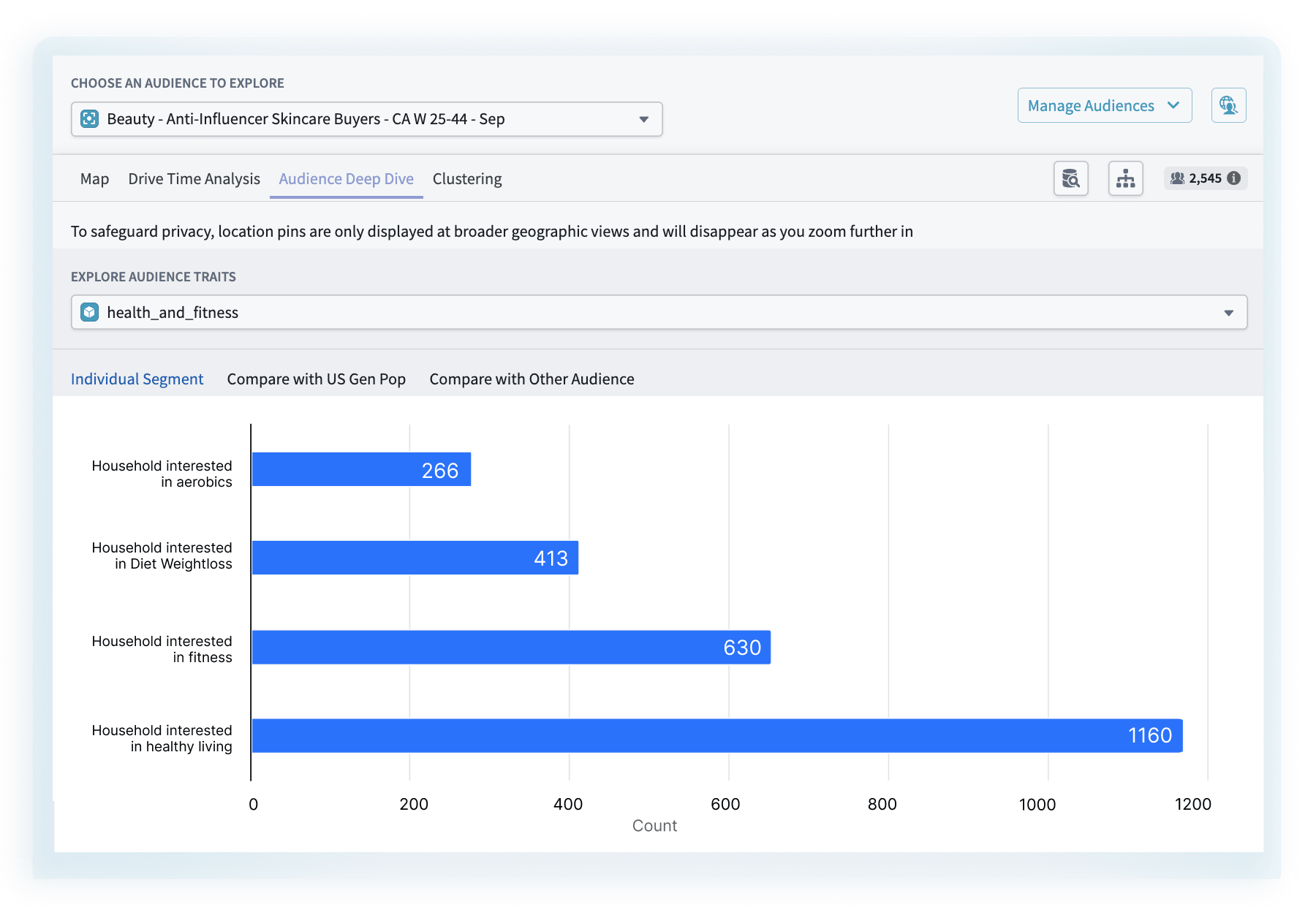
Consider this: Dozens of skincare brands alone are struggling to reach the same cohort of wellness-driven 25–45-year-old women in California.
The one that’ll ultimately win their business is the brand that understands what this audience values, what they trust (or don’t trust), and the specific levers that’ll make these consumers pay attention. “Business as usual” generally means that brands and marketers are strategizing based on woefully incomplete audience data. Maybe you know that your audience is interested in fitness, beauty, and wellness. You’ve got the basics—age, geographic location, job title, browsing details, some info on real-world foot traffic patterns—and so you run a campaign on that data.
Some of that audience converts, some doesn’t. You optimize toward the consumers who do, and call it a day. Rinse and repeat.
What you're missing is an actual understanding of the behaviors: Why did those specific segments convert, or not?
In a landscape where every competitor has similar demographics and similar ad budgets, that visibility to what your customers actually think, what makes them decide, and where they actually go is the real competitive advantage.
With SATS, you're able to drill down into granular consumer details, like:
Store proximity and visit frequency, which reveal how and where customers actually prefer to shop.
Competing brand purchases, spotlighting what they're actually deciding between and what made them switch.
Lifestyle and life stage signals suggest what they have time for, what they prioritize, and what they're willing to spend on.
Real-world movement patterns delineate when they're most receptive and where they're actually present.
SATS doesn't just tell you who to target—it tells you where they shop, what brands they use, what they do on the weekends, and how to reach them.
That's the data advantage. And it's what separates brands that are guessing from brands that are winning. Fill out the form below and our team will get in touch to discuss what SATS can do for you.
Stagwell ID Graph is now available to Salesforce Data 360 customers, delivering expanded audience reach and activation through zero-copy Clean Room technology.