
Add custom AI agents to your marketing team with Agent Cloud


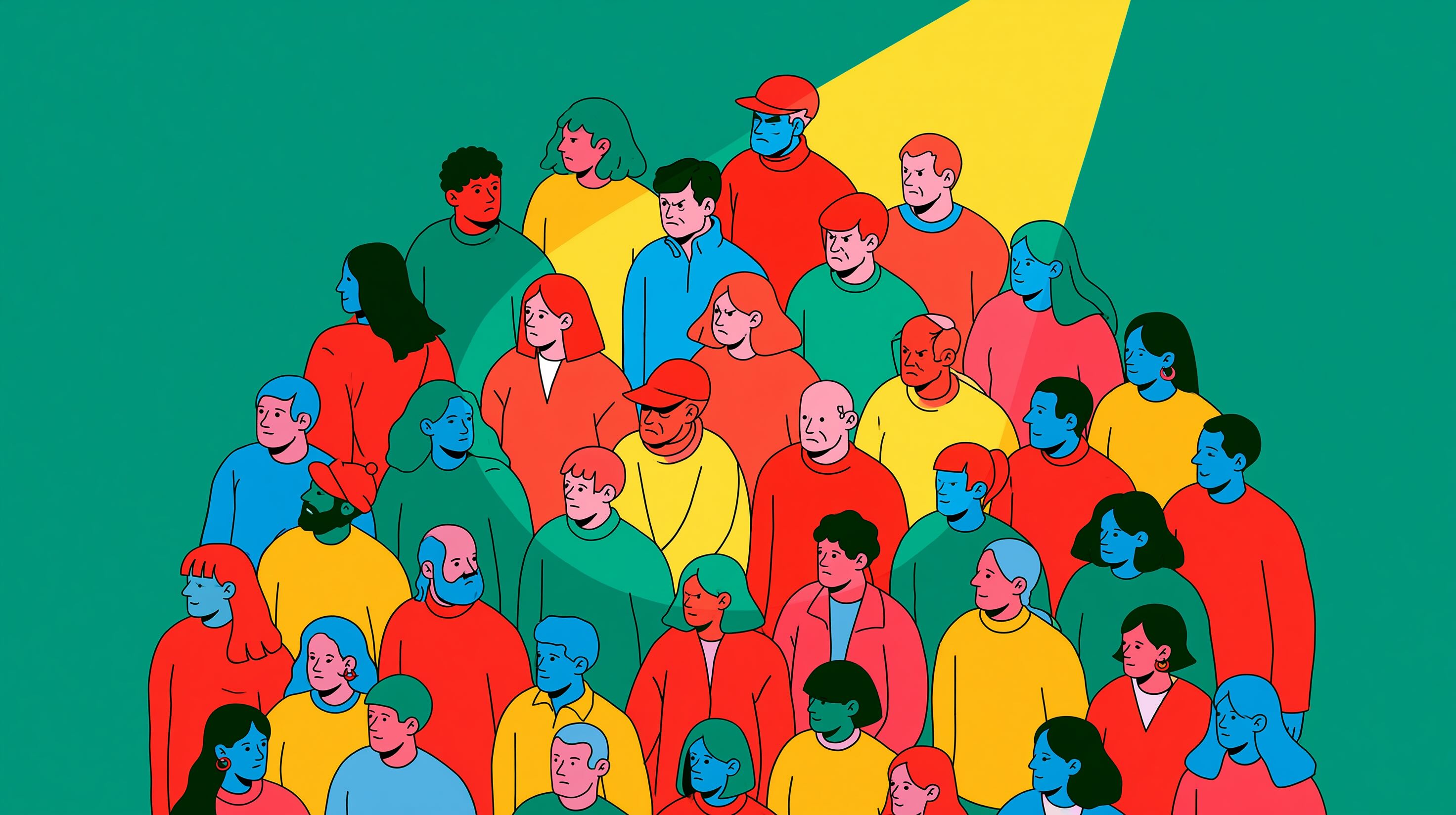
If you ask a loyal customer what they think of an iconic household brand, their response is probably shaped by personal experiences, emotional attachment, and years of exposure to persuasive brand marketing.
But ask a Large Language Model (LLM) like ChatGPT, Gemini, or Claude the exact same question, and you will likely receive vastly different, and noticeably harsher, feedback. AI doesn’t have warm fuzzy feelings about brands, and AI reputation is solidified in a relatively cold, clinical way.
This expanding "perception gap" is becoming one of the most critical challenges facing modern marketers. As generative AI compresses the traditional purchase funnel and directly shapes consumer recommendations, mastering LLM brand visibility and understanding why AI treats algorithmic brand equity so dispassionately should be a core strategic priority.
With Bain reporting that 95% of enterprise purchase decisions go to vendors already established on a buyer’s initial shortlist, mastering LLM brand visibility and AI search visibility has become a core business imperative.
However, showing up in AI responses is only half the battle. The deeper challenge lies in how AI models interpret and evaluate your company when they do mention it.
The "perception gap" refers to the stark divide between how human consumers evaluate brand equity and how generative AI models reconstruct it.
In a recent webinar hosted by BERA.ai, brand strategy and product experts demonstrated how leading LLMs consistently judge established brands through a much tougher lens than human survey respondents do.
When analyzing brand equity data for classic apparel brand Levi’s, human consumers placed the brand in the 94th percentile for overall brand love. Yet, when identical survey frameworks were fielded directly to leading LLMs, the scores dropped significantly. Gemini, Claude, and ChatGPT all ranked the brand substantially lower than human consumers did.
As Janu Lakshmanan, brand strategist and VP of Professional Services at BERA, observed during the session, Levi’s wasn’t an anomaly: "[LLMs] systematically see brand equity differently than consumers do...for over a dozen brands that I've looked at, the AI models have a different perception than consumers."
Recent research in Generative Engine Optimization (GEO)—anchored by the landmark peer-reviewed study “GEO: Generative Engine Optimization” from researchers at Princeton University, Georgia Tech, IIT Delhi, and the Allen Institute for AI—reveals that AI models do not simply mirror consumer popularity or market share.
Across a benchmark of 10,000 queries, the researchers proved that generative engines evaluate content through a rigid synthesis framework rather than emotional brand preference. Content that lacks clear, verifiable proof points is systematically stripped of its marketing polish (no matter how many times your website promises “cutting-edge tech that surpasses the competition”).
However, structuring content specifically for LLM retrieval pays off. Tactics like adding hard statistics (yielding a 31%–37% citation uplift), direct expert quotations (30%–41% uplift), and inline primary sources (30%–40% uplift) can boost a brand's visibility in AI-generated answers by up to 40%, with lower-ranked authoritative sources seeing gains of up to 115%.
While human brand health metrics rely heavily on mental availability, emotional resonance, and category familiarity, AI engines function as synthesis tools. They collect, compress, and re-frame brand narratives across thousands of web data points long before a buyer ever reaches a site.
If a brand's online footprint lacks clear, verifiable proof points, the result is severe "brand drift" or narrative flattening. A market leader with high consumer equity can find itself reduced to generic category language in AI recommendations.
That means when brands start to lose control of their AI reputation and visibility, they’re less likely to stand out from the pack when consumers start querying their LLM of choice about the dishwasher, high-end stereo, or running shoes they’re interested in buying.
Humans routinely grant favored brands an "emotional cushion." Consumers willingly forgive minor product flaws, customer service hiccups, or higher price points because of brand heritage, status association, or personal habit.
AI models possess no emotional loyalty. They evaluate algorithmic brand equity by treating companies as structured feature vectors.
For instance, when advanced reasoning models evaluate a brand's price-to-value relationship, they conduct dispassionately cold comparisons against lower-cost alternatives.
Where a human consumer sees a premium brand worth paying for, an LLM often flags a pricing discrepancy, docking the brand on value metrics unless explicit, data-driven justification exists online.
While human memory naturally filters out past controversies or isolated negative reviews over time, LLMs gorge on the uncurated web at scale.
Peer-reviewed GEO research demonstrates that AI search engines exhibit a heavy bias toward third-party earned media—including review aggregators (like G2 or Trustpilot), news publications, and community forums (such as Reddit)—over brand-owned websites.
When an LLM executes a query, negative sentiment embedded in forum debates or review clusters carries disproportionate statistical weight during Retrieval-Augmented Generation (RAG).
Consequently, unresolved customer complaints or PR missteps drag down AI reputation far more aggressively than they impact traditional human sentiment.
Modern generative engines do not rely solely on static pre-training data. They actively deploy RAG frameworks to pull live information and cross-examine it against established knowledge graphs.
‘Entity consistency’ refers to the uniform, machine-readable alignment of a brand’s identity and factual details across both owned channels and third-party digital sources. Maintaining this alignment prevents entity ambiguity and AI hallucinations, ensuring your brand is accurately represented and recommended in generative search.
When an AI crawler encounters promotional marketing slogans that lack structured entity consistency (such as standardized JSON-LD Schema markup, structured data tables, or clear technical documentation) its verification algorithms treat those claims as unverified marketing copy.
Rather than willingly parroting promotional promises, the model seeks external consensus. If independent validation is sparse or inconsistent across sources, the AI defaults to a cautious, critical tone, diluting the brand’s positioning and lowering its Share of Voice in AI models.
Compounding the difficulty of managing AI brand sentiment is the delay inherent in model updating. There’s typically a 12-week performance lag between launching a new PR or brand campaign and seeing those changes reflected in an LLM’s underlying knowledge outputs.
Furthermore, because LLM outputs are probabilistic and fluctuate every time a user poses a query, brands can’t rely on single-point audits. Tracking AI reputation requires continuous, rolling measurements across multiple prompt variations to establish a true baseline of visibility and sentiment.
Closing the ‘Perception Gap’ requires a coordinated strategy across PR, Brand, Content, and Performance teams to implement Generative Engine Optimization (GEO) and Answer Engine Optimization (AEO).
Great! But...how?
BERA’s LLM Brand Rankings provides enterprise brand leaders with the specialized intelligence needed to audit, monitor, and influence how AI models represent their brand.
By executing automated, repeated queries (48 iterations per brand, category, and model weekly), BERA delivers stable, directional benchmark data comparing human brand equity directly against LLM outputs across ChatGPT, Gemini, and Claude.
BERA pinpoints where AI weakens your brand positioning, identifies the exact web sources shaping model outputs, and provides actionable roadmaps to align AI perception with human brand reality.
Check out the full webinar, "How Does AI Rank Your Brand?"
