
Add custom AI agents to your marketing team with Agent Cloud


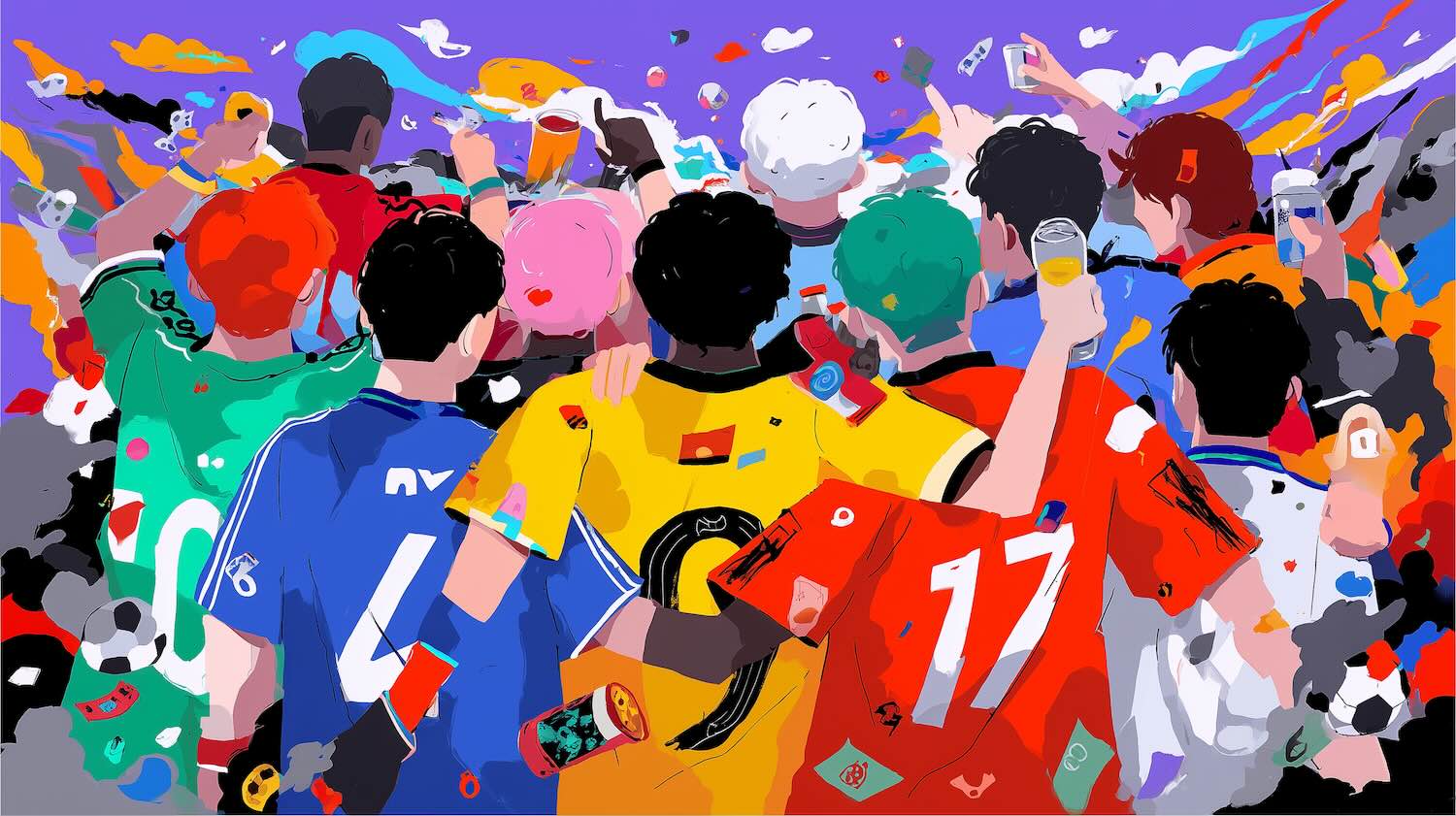
Dust off your kits, start plotting your brackets, and get ready for a 48-team marathon—the 2026 World Cup kicks off on June 11. It’s a chance for all sorts of brands to catch soccer mania, but betting brands in particular are ready to get in on the action.
This year more than $150 billion is expected to be wagered on the tournament globally, making The Mondial a mecca for the gaming industry. While the Super Bowl may be the single biggest betting day in the US, the World Cup blows it out of the water in terms of scale, duration, and global revenue.
But what you won't see on the highlights reel are the red-eyed marketing teams working through the night to deliver quick turnaround campaigns. That includes the legal teams frantically running compliance checks on a thousand dynamic ads across a dozen different markets. Or the creative directors asking them, for the fourth time this week, whether that line of copy is actually legal in Germany.
2025 was a big year of change for the advertising industry, with 96% of marketers reporting that content demand has more than doubled. For regulated industries, this content proliferation hits especially hard, since each spot needs to be buttoned-up and compliant.
The reality on the ground:
Content production at this scale, and to exacting requirements, has reached a whole new level of te-di-ous. And this is exacerbated by seasonal events like the World Cup, which might require a hyper-localized approach depending on the match, as well as fast-tracked campaigns to piggyback on big news or controversies.
According to 2023 research, in the last World Cup there were an average of 5.2 gaming-related ads aired per match on UK commercial television, totaling 176 ads across 30 broadcast matches. In 2026, there’s even more playing time, with a whopping total of 104 matches stretching from June through June 11–July 19.
And the stats above are just for television. Multiply that number for every betting operator, every advertising platform, every market, and every language, and the sheer number of ads that need to be properly compliant becomes a bit nightmarish.
While everyone's been busy using AI to generate more creative content faster, not enough companies are pausing to ask “wait, can we not use AI to check compliance and speed up our approval processes?”
Because the answer is yes, you can.
On top of familiar marketing concerns—like “does our messaging actually land?”—the gaming industry has another layer of legal complexity to deal with: maintaining social responsibility by avoiding misleading offers, an illusory sense of urgency, non-compliant targeting, and so on.
Getting a compliant message, to the right consumers and on the right platform is paramount. Getting it wrong is a costly penalty, both financially and reputationally.
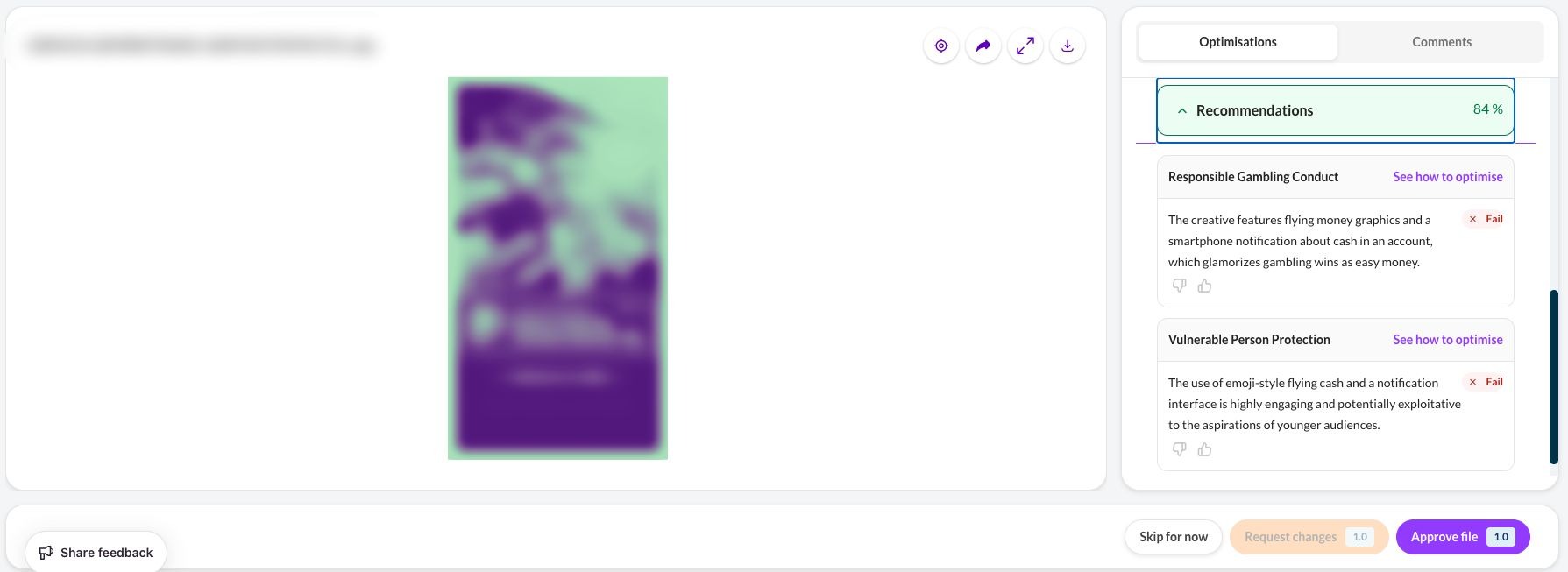
An in-platform illustration of how SmartAssets automated rule-checking flags potential compliance issues.
The good news is that the same AI transformation creating this content avalanche can also be the solution to managing it.
Creative governance platforms like SmartAssets are already helping regulated advertisers automate the compliance process, reducing what previously took teams hundreds of hours down to minutes.
Let's say a sports betting brand needs to approve 150 Instagram ads before the weekend. The legalese at the bottom of each image needs to be specific to whatever puts your compliance team at ease, and the copy can't throw any red flags when it comes to industry-specific guardrails.
Upload your creatives in a single click, and the platform gets straight to work. Computer vision scans every asset at a granular level — not just a once-over, but a deep read of the minutiae that human eyes miss when they're on their fifth compliance pass of the day.
From there, it cross-checks every visual and text element against the full stack: ad platform best practices, your own brand guardrails, specific regulatory requirements, and media best practices designed to make sure the ad actually performs once it's live.
For the gaming industry heading into the World Cup, the math is simple. The more content you produce, the more you need guardrails in place before anything goes live, and not after.
If your goal isn’t just to make things faster, but to make sure you’re getting it right the first time around, a product demo is as free as drinks at the casino.
