
Add custom AI agents to your marketing team with Agent Cloud



From junior-level comms associates to CMOs, the marketing industry is simmering with a quiet, pervasive anxiety. Keynote speakers at flashy tech conferences lean heavily on the “AI as a colleague” metaphor, and we’re very familiar with the oft-used phrase, “AI won’t replace you, but a person using AI might.”
But too often, this slams the door on any substantive conversation about career longevity, job security, or what the future of work even looks like. Employees—those unpredictable, flesh-and-blood humans currently staffing agencies and brands—are right to have doubts.
For skeptics, the "human-in-the-loop" model can look less like a collaborative future and more like a blueprint for a cost-cutting skeleton crew. Imagine a single, high-paid, human strategist at the top managing a digital workforce of autonomous agents, with the middle and junior tiers effectively hollowed out.

The New York Times recently celebrated a vision of this sort with their glowing profile of a billion-dollar company that's essentially two humans and a lot of AI, all selling highly regulated prescription meds (unsurprisingly, there's a bit more nuance to the story).
Let's assume that the ability to replace the majority of one's current workforce with AI tools is indeed feasible. Where do those people go, and what do they do? What happens to the marketing industry when there are increasingly fewer people with the income to actually...market goods to?
We have to move past the sanitized, LinkedIn-friendly narrative. The suspicion many employees feel, the sense that AI is primarily a tool for management to consolidate wealth and slash headcount, isn't just Ludditism or knee-jerk resistance to change. It’s a rational response to a slash-and-burn approach to digital transformation.
2023 data from Goldman Sachs suggested that while AI could drive a 7% increase in global GDP, it also exposes roughly 300 million full-time jobs to automation, with administrative and knowledge worker sectors like marketing facing the highest exposure. And a lot of rapid change has happened in the AI space since 2023, to say the least.
To build a truly resilient marketing organization, leadership must acknowledge the difference between using AI to enhance human potential and using it to systematically dismantle the workforce for slightly higher profit margins.
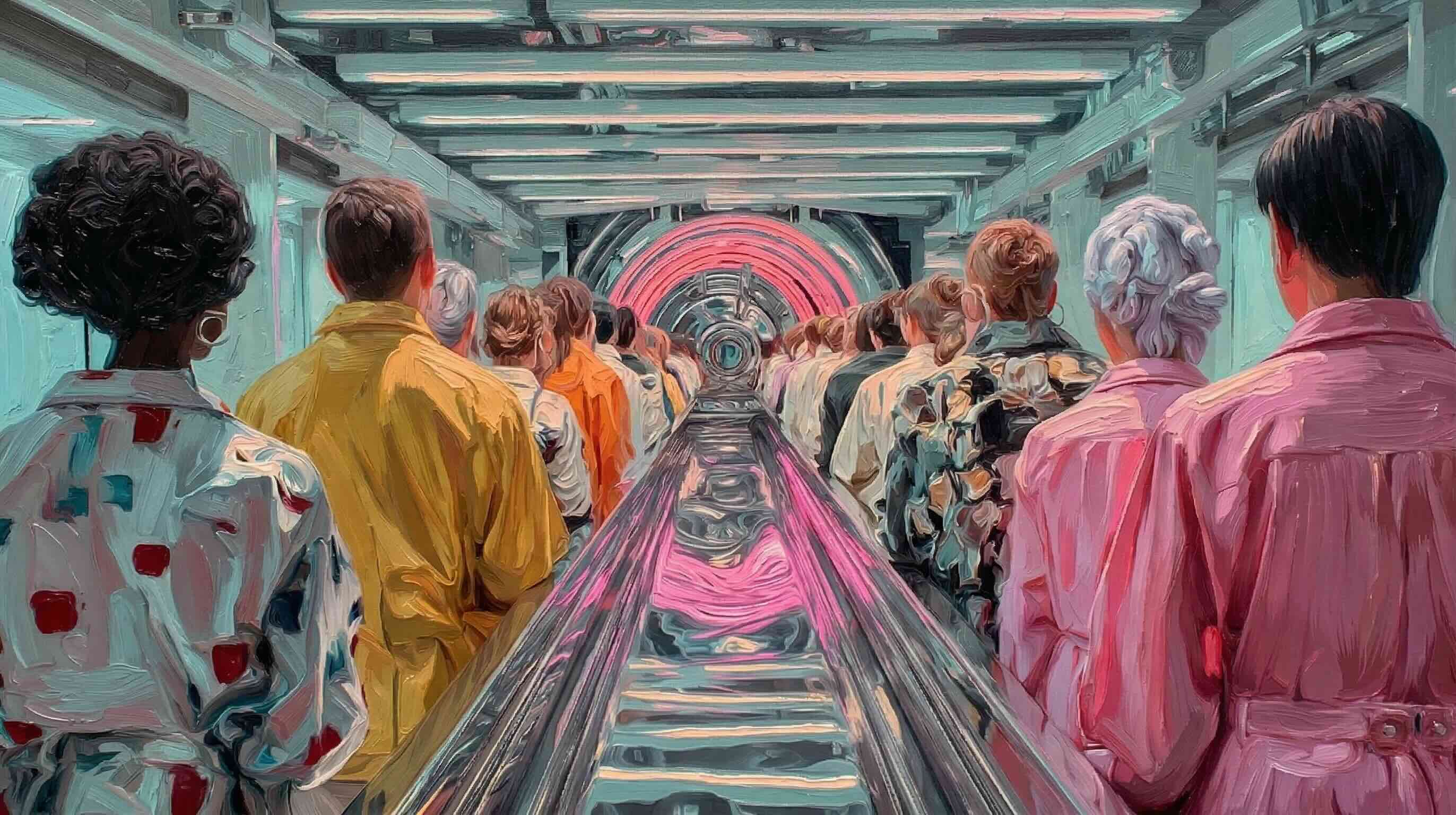
When companies prioritize immediate EBITDA growth over long-term brand health, AI integration becomes a race to the bottom.
This approach treats human creativity as a purely transactional expense to be minimized, rather than a resource to be savored and supported (which has always been the attitude at Stagwell, for instance, which houses well-known agency names like 72andSunny and Code + Theory).
Gartner predicts a 'layoff boomerang,' where 50% of firms that slashed headcount for AI will rehire by 2027 to fix the resulting decay in service quality and brand empathy. There might not be a proper reckoning on the horizon, either, since leadership would likely be reluctant to blame the whiplash of firing-and-hiring on the overestimation of AI automation.
Here are three hypothetical ways short-sighted organizations are currently mismanaging this transition to a workforce that is AI-augmented rather than AI-dominated:
Challenging the inevitably of this future doesn’t mean banning AI tools or pretending that this is all just a shiny novelty that will recede into irrelevance, like the metaverse. A humane approach acknowledges that while AI will change the shape of a team, it should be used to elevate the quality of work, not just the quantity of profit.
Here are three ways responsible companies can integrate AI while honoring their human capital, and perhaps help stem the growing wave of anti-AI sentiment among an anxious workforce.
Instead of hiring one or two "AI experts" to replace the entire marketing team, humane companies invest in turning their current marketers into AI-augmented power users. When a junior designer uses generative tools to handle tedious masking or image edits, the response from leadership isn’t “great, now we can lay you off and automate your job.” It’s “look at how much time you now have to focus on creative direction, get mentored by more senior designers, and continue to upskill your AI chops.”
Short-sighted companies measure AI success solely by hours saved. Humane companies measure it by value unlocked.
If AI saves a content team 20 hours a week, a responsible leader doesn't cut the staff by 30%. They reinvest those 20 hours into higher-order tasks: deeper audience research or multi-channel strategy that was previously "too expensive" to execute. Gartner refers to this as Return on Employee (ROE): leveraging AI to help people do more impactful work, rather than just cutting operational costs.
Acknowledging that some headcount reduction at the junior level is an inevitable "growing pain" of new technology is the only way to maintain trust and credibility. If certain roles are becoming obsolete, responsible firms provide clear transition pathways. This creates a climate in which upskilling is seen as a worthwhile path, not simply a short-term scramble before the next AI-driven layoff.
The sentiment that "AI is ultimately for the 1%" persists because, for many, the evidence points that way. If the benefits of AI-driven efficiency only flow upward to shareholders, the industry will face a massive brain drain.
AI adoption and humane management processes aren’t mutually exclusive. Nor are profit and responsible corporate stewardship—just look at the rise of the B Corporation, which puts an emphasis on social responsibility while ensuring that companies are still incentivized to do the obvious thing (i.e., make money).
Organizations that stake their reputation on striking a balance between AI advocacy and humane leadership will continue to thrive, while enjoying the halo effect that comes with this stance. The same can’t be said for brands or agencies that see the rise of AI tools as simply another way to drastically eliminate the pesky, expensive humans who actually drive creativity and change.
